Oregon’s “Universal Health Plan” funding proposals are starting to come to light. These numbers raise serious questions.
Under the proposals, up to 60% of adults in Oregon could pay nothing into the system, while others would face a new healthcare tax of 10–15%. Today, only about 30% of Oregonians are on the Oregon Health Plan (OHP) and pay nothing for their coverage. That means roughly twice as many people could receive free healthcare under the new plan.
How much do you pay right now just to have health insurance? And are you legally required to pay those premiums no matter what?
The graph below shows estimated new tax costs based on yearly income under a high-end scenario.
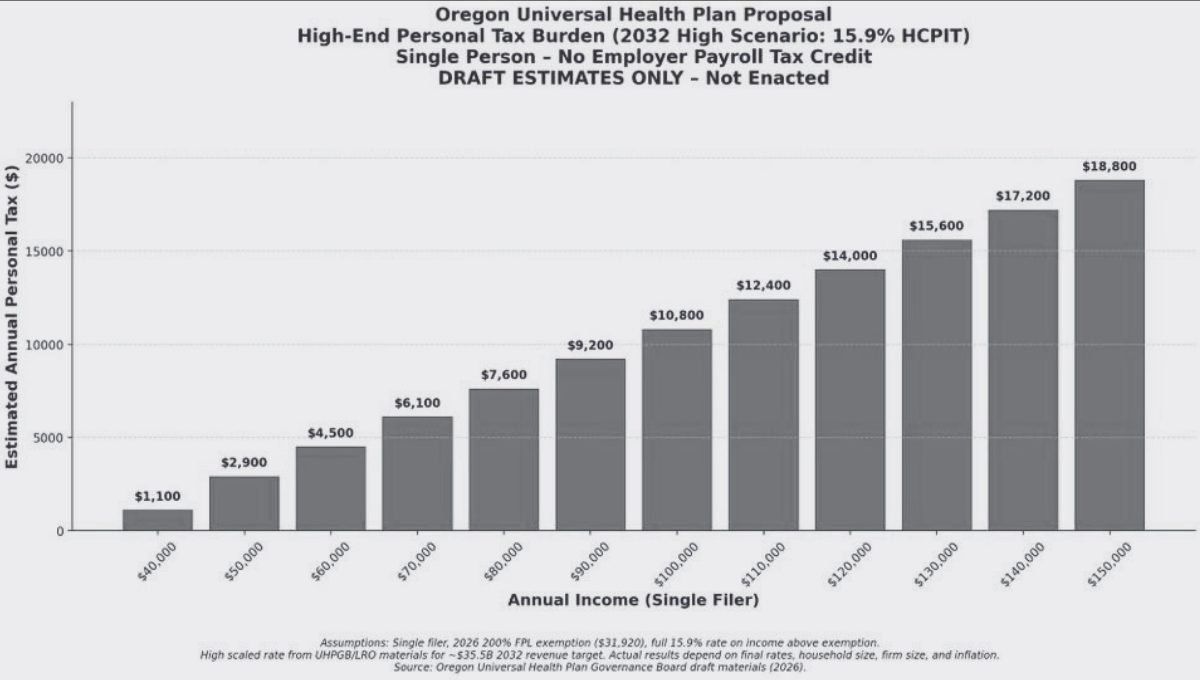
Oregon’s constitutional amendment states that everybody has a right to “affordable healthcare.” Since when are rights subjective, and who decides what is affordable? A new 15% tax on the roughly 40% of us who would be forced to pay it is not affordable for most of the people subject to it under the threat of legal penalties.